
What Size Watch Should You Wear?
The number everyone checks is the case diameter. It is also the number that tells you least about how a watch will actually sit on your wrist. What to measure instead, and why watches are getting smaller again.
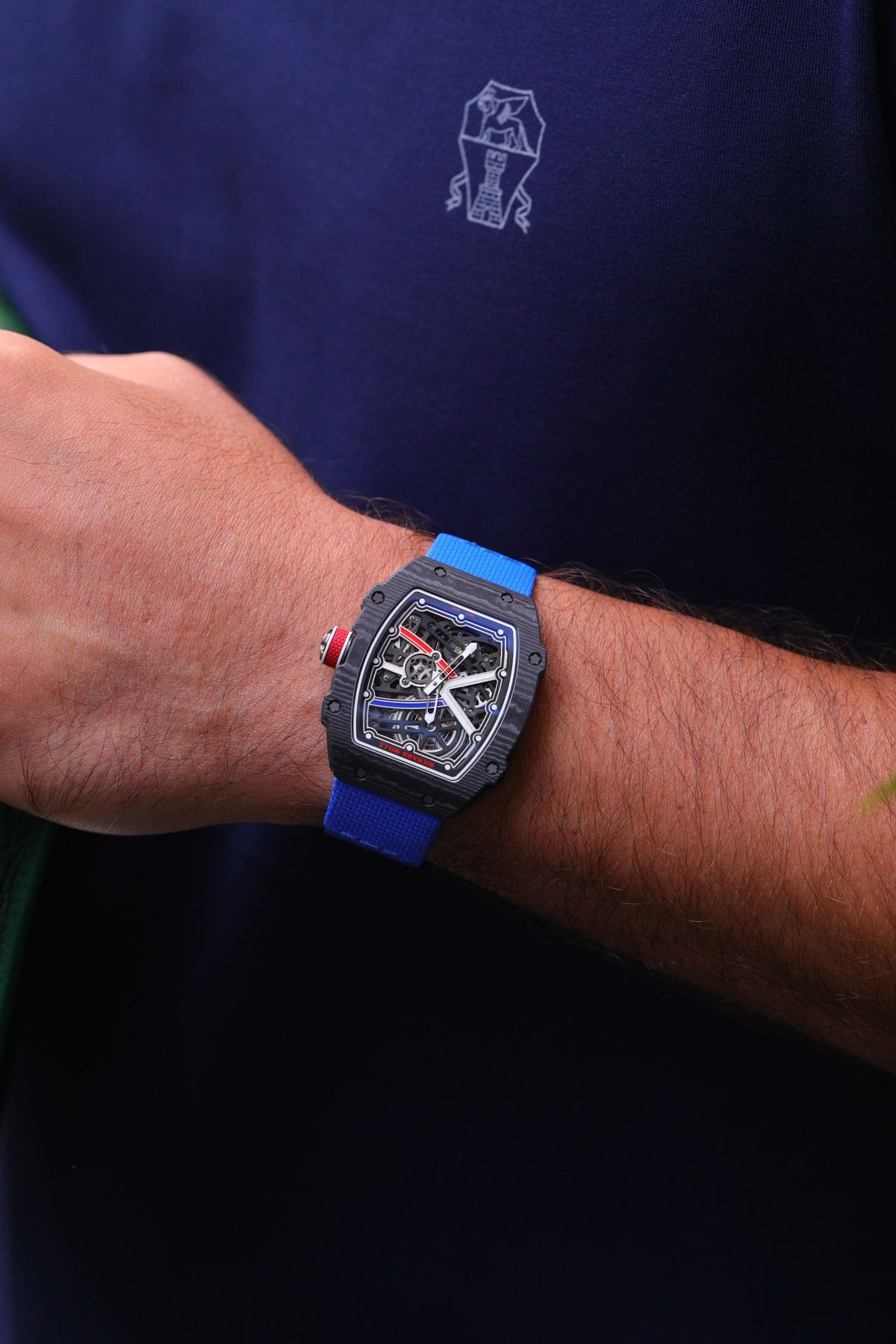
Most people choose a watch size by a single figure: 36, 39, 41 millimetres. It seems precise. In practice, two watches with the same diameter can wear completely differently, and a watch that looks right in a photograph can overwhelm a wrist in person.
Why diameter misleads
Case diameter measures the width of the case, usually excluding the crown. It tells you nothing about how far the watch extends along your wrist, how thick it is, or how the bracelet meets the case. Those three things decide how a watch actually wears.
Lug to lug: the measurement that matters
The lugs are the arms that attach the strap or bracelet to the case. The distance from the tip of the top lug to the tip of the bottom lug is the lug to lug length, and it is the single best predictor of fit.
The rule is simple. The lugs should not extend past the flat top of your wrist. If they overhang the edges, the watch is too large, regardless of its diameter. The strap or bracelet should curve down from the lugs, not float above the wrist.
Measuring your wrist
Wrap a strip of paper or a piece of string around your wrist just above the wrist bone, mark where it meets, and measure it flat. As a rough starting point only:
- Smaller wrists, below about 16.5 centimetres, are often best suited to cases in the region of 34 to 38 millimetres.
- Medium wrists, around 16.5 to 18 centimetres, generally carry 38 to 41 millimetres comfortably.
- Larger wrists, above about 18 centimetres, can wear 40 to 42 millimetres and sometimes more.
These ranges are a guide, not a rule. Case shape, thickness and lug length can move a watch a full size in either direction, which is why trying it on matters more than any chart.
Shape changes everything
Square and rectangular cases wear larger than their numbers suggest. A rectangular Cartier Tank or a square Santos covers more of the wrist than a round watch of similar width, because the corners fill space a circle leaves empty. Our Cartier page covers the shapes in more detail.
Integrated bracelets wear differently again. On a Royal Oak or a Nautilus, the bracelet flows directly from the case, which makes the watch feel both more solid and more continuous on the wrist than its diameter implies. See our pages for Audemars Piguet and Patek Philippe.
Thickness matters most with a shirt. A dress watch is thin so that it slides beneath a shirt cuff. A thick diver will not, and if you wear tailoring most days, that alone may decide the choice.
Watches are getting smaller again
For much of the last twenty years, men's watches grew steadily, with 42, 44 and even 46 millimetre cases common. That has turned. Smaller cases are one of the defining trends of 2026, with major houses reintroducing and expanding their smaller sizes, and the classic 36 millimetre case back in favour.
For anyone with a smaller wrist who spent years being told a 42 was standard, this is good news. The proportions most classic designs were originally drawn at are fashionable again.
Try it on, and try several
A photograph cannot tell you how a watch wears, and neither can a measurement taken on its own. The only reliable test is your own wrist, with two or three sizes side by side, looking in a mirror at arm's length rather than down at the dial.
Compare sizes in person
Come to the boutique and try several sizes and shapes side by side. We will measure your wrist and show you how different cases sit on it, with no pressure to buy. See the houses we hold on our brands page, or visit 45G Merab Kostava Street. Call +995 555 86 88 88.