
A Hundred Years of the Rolex Oyster
In 1926 Rolex patented a case designed to keep water and dust out of a wristwatch, and called it the Oyster. A hundred years later it sits beneath almost every Rolex ever made, and the brand has marked the centenary with a new Oyster Perpetual.
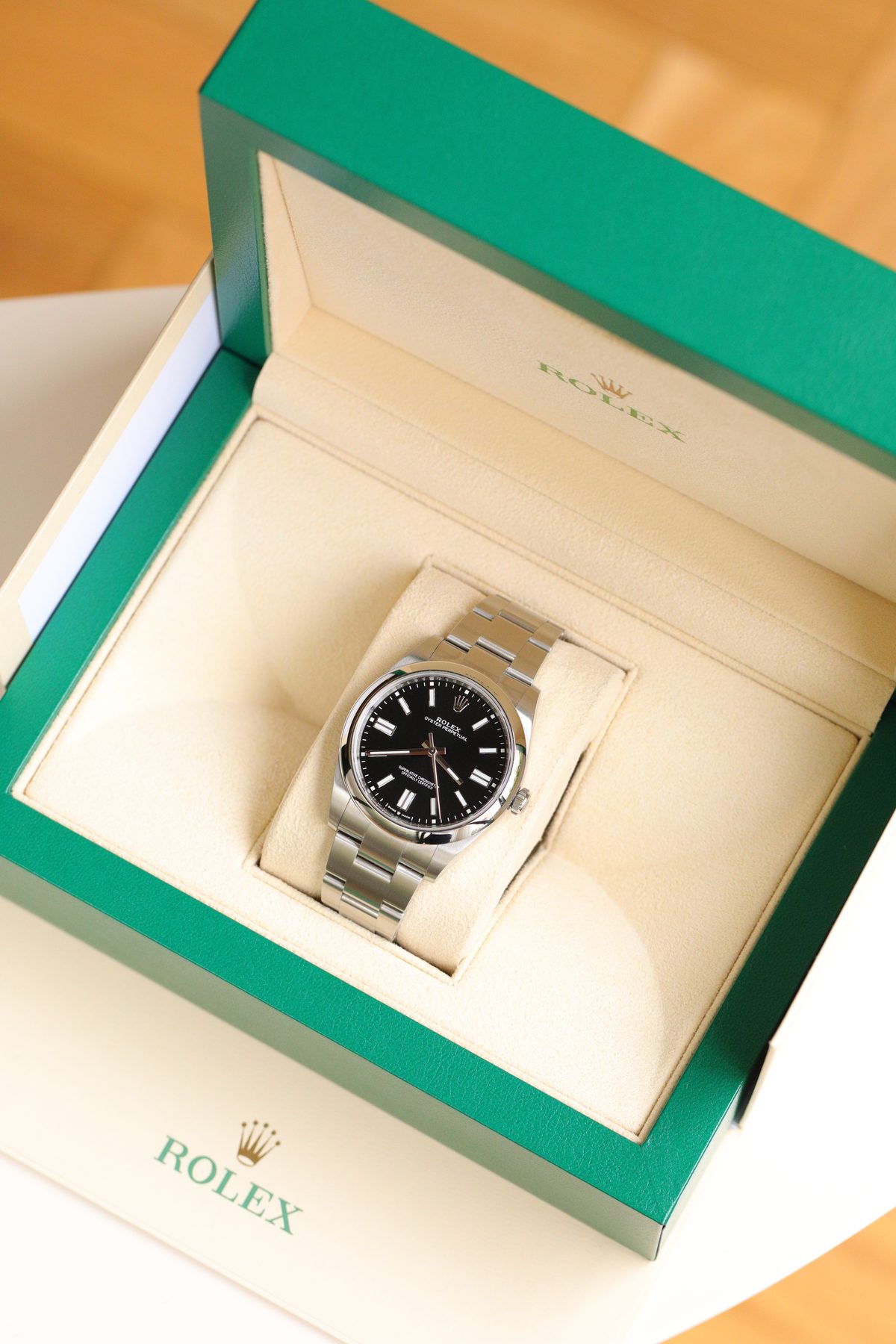
Early wristwatches had a weakness their owners knew well. Dust and moisture found their way into the case, and a watch worn every day did not last long before it needed attention.
The problem, solved
Rolex's answer, patented in 1926, was a case sealed like an oyster shell. A caseback, bezel and winding crown that all screw down against the case, closing it off from the outside. It sounds simple now. At the time it was a genuine step forward, and the name stuck.
The proof
In 1927, the swimmer Mercedes Gleitze wore an Oyster during an attempt to swim the English Channel. After hours in cold sea water, the watch was still running. Rolex made the most of it with a front page newspaper advertisement, and in doing so helped invent the idea of the watch as proven equipment rather than jewellery.
A century on
To mark the anniversary, Rolex introduced a new Oyster Perpetual 36 with a multicoloured lacquer dial built around the Jubilee motif the brand first used at the end of the 1970s. It sits in an Oystersteel case, water resistant to 100 metres.
It is a playful piece from a brand not known for playfulness, and it fits a wider shift this year towards colour and towards the classic 36 millimetre case.
What the Oyster means for owners today
The Oyster principle only works while the seals are sound. The rubber gaskets at the crown, caseback and crystal are consumable parts, and they age whether or not the watch goes near water. And the crown has to be screwed fully home: an Oyster with its crown left open is not sealed at all.
Our guide to water resistance explains what the numbers on your caseback actually mean, and our guide to Rolex service covers when the seals and the movement need attention.
Have your Oyster pressure tested
We test water resistance with specialised equipment, and the diagnostic costs nothing. See the Rolex references we hold on our Rolex page, or visit 45G Merab Kostava Street. Call +995 555 86 88 88.