
Buying a Pre-Owned Rolex in Tbilisi: Six Checks Before You Pay
Case sharpness, dial originality, the movement, the bracelet, the paperwork – and the ten-second test almost nobody runs. What our workshop checks on every Rolex, and how to check it yourself.
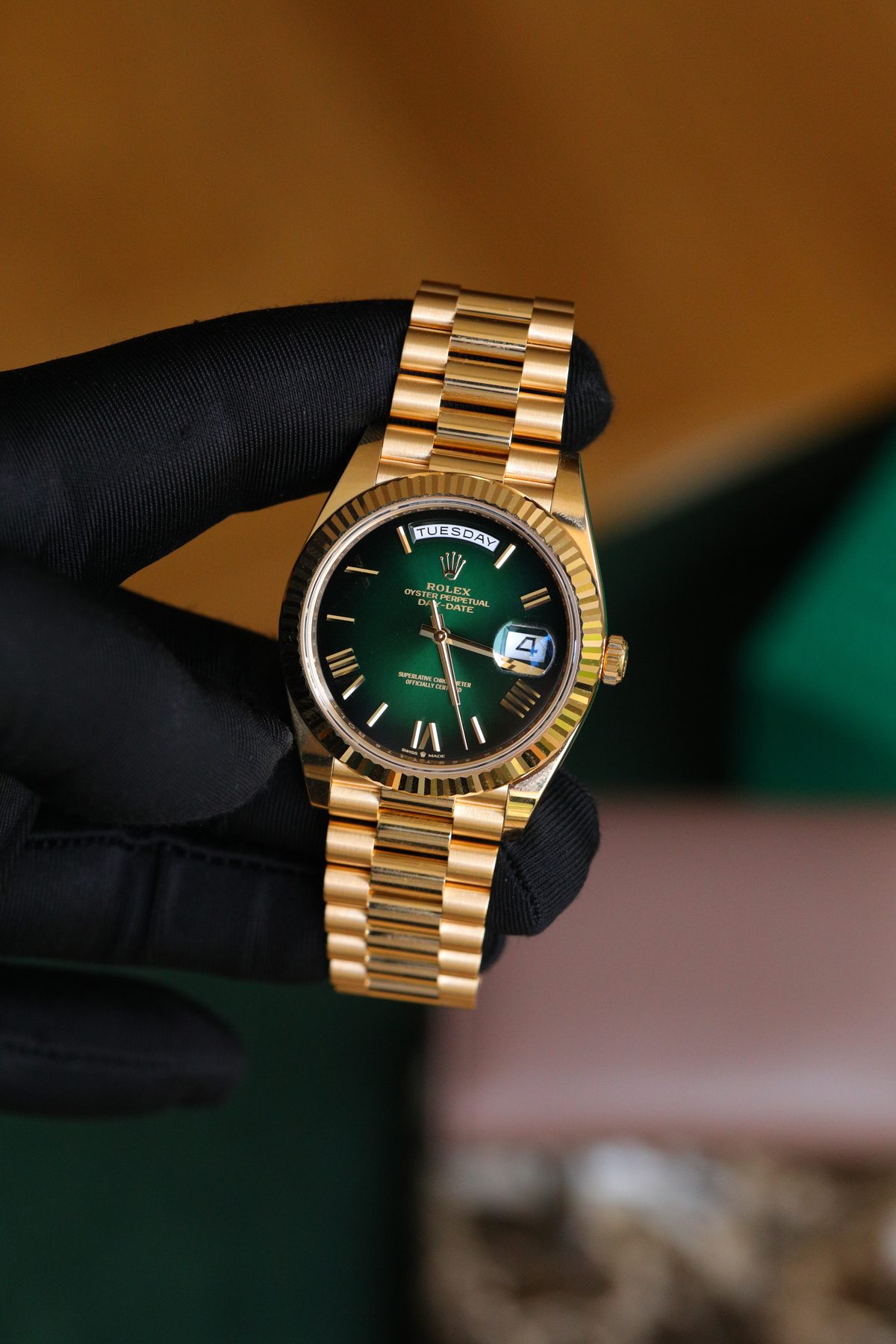
A pre-owned Rolex is often a better buy than a new one. The waiting lists are shorter, the choice is wider, and a well-kept watch from fifteen years ago will outlive most things you own. But the pre-owned market is also where the mistakes happen, because a Rolex can be genuine and still be wrong – a real case with a replaced dial, a real movement in a heavily polished shell, a real bracelet stretched past the point of repair.
None of that is exotic knowledge. Below are the six things we check on every Rolex that comes into our workshop, in the order we check them, and how to look for each one yourself.
1. The case, before anything else
Start with the shape, not the shine. A Rolex case is made of flat brushed surfaces meeting polished ones at a defined edge, and those edges are meant to be crisp. Every polish removes a little metal, and enough polishing rounds them off permanently.
Look along the top of the lugs in daylight and tilt the watch. The transition between the brushed lug top and the polished bevel on the side should be a clean line, not a soft curve. If the lugs look thin, or the space between them has widened, the case has been worked.
This matters more than most buyers realise. A scratched but sharp case is worth more than a mirror-bright one with soft edges, and it always will be. Metal cannot be put back.
2. The dial and hands
The dial is where value is made or destroyed. A refinished dial – repainted, reprinted, relumed – can cost a watch a substantial part of its worth, and on a vintage reference it can cost most of it.
Look at the printing under a loupe. Rolex text is sharp with clean edges; refinished printing tends to be slightly thick, slightly soft, or subtly misaligned. Check the spacing around the coronet and the depth of the applied markers. Then look at the lume: the plots on the dial and the lume in the hands should be the same colour. Hands are replaced far more often than dials, and a mismatch is the easiest thing in the world to see once you know to look.
3. The movement
Most Rolex watches have a solid caseback, so this is where an independent check earns its cost. The movement should be the correct calibre for the reference – a 16610 Submariner and a 116610 use different movements, and a mismatch means something has been swapped.
On a timing machine a healthy Rolex runs within a few seconds a day and holds that rate across positions. A watch that gains in one position and loses badly in another usually needs a service; a watch that will not hold any consistent rate may have been apart before, and not carefully.
If you would like to understand what you are looking at, our guide to reading a watch movement covers the basics in plain language.
4. The bracelet
Hold the watch by the head and let the bracelet hang, then take it by both ends and pull gently. Some movement is normal on any bracelet that has been worn. Significant sag means the links and pins have worn, and stretch cannot be reversed – only replaced, link by link, at real cost.
Check the clasp closes with a firm, definite click rather than a soft one. Count the links, too: a full-length bracelet is worth meaningfully more than a shortened one, and removed links are rarely returned by a previous owner.
5. Papers, box and history
A full set – original card or papers, box, and any service records – adds real value, and on some references a great deal of it. But paperwork proves less than people think. Cards are forged, and boxes are bought and sold separately from the watches they came with.
Treat the papers as one piece of evidence among several. The serial number on the card should match the watch. The reference should match the configuration in front of you. Where a service record exists, it should be consistent with the condition of the case and the movement. If the paperwork tells a different story from the watch itself, believe the watch.
6. Magnetism – the check almost nobody runs
This one takes ten seconds and is skipped almost universally. A magnetised hairspring makes a perfectly healthy watch run fast, sometimes by minutes a day, and it looks exactly like a watch that needs an expensive service.
It is not expensive to fix. Demagnetising takes a few moments with the right tool, and the watch usually returns to its normal rate immediately. But a seller who does not know this may price the watch as though the movement is failing – and a buyer who does not know it may pay for a service the watch never needed. We check for it before quoting any work, precisely because it is so often the whole problem.
What this adds up to
Six checks, none of which require special equipment beyond a loupe and good light. In roughly ten minutes you can tell whether a watch deserves a proper inspection, and whether the asking price is anywhere near reasonable.
What the ten minutes cannot tell you is whether the movement is correct, whether the watch runs to specification across positions, and whether it is genuine at the level that matters. That needs a caseback off and a timing machine. Have that done before you pay, not after – a diagnostic costs nothing next to the price of the watch.
- Look at the case shape, not the polish. Sharp edges over bright surfaces, every time.
- Match the lume. Dial plots and hands should be the same colour.
- Ask which calibre is inside and check it belongs to the reference.
- Hang the bracelet and count the links.
- Read the papers against the watch, and believe the watch.
- Test for magnetism before assuming the watch needs a service.
Thinking about a Rolex?
Every Rolex that reaches our display has been through this process first. You can see the references we currently hold on our Rolex page, or bring a watch you are considering and we will check it on a timing machine at no charge – whether or not you bought it from us. Visit 45G Merab Kostava Street, or call +995 555 86 88 88.