
How to Read a Watch Movement: A Beginner's Guide
Automatic, manual or quartz, and the handful of things you can judge about a watch just by looking through the caseback. A plain-language start for anyone buying their first mechanical timepiece in Tbilisi.
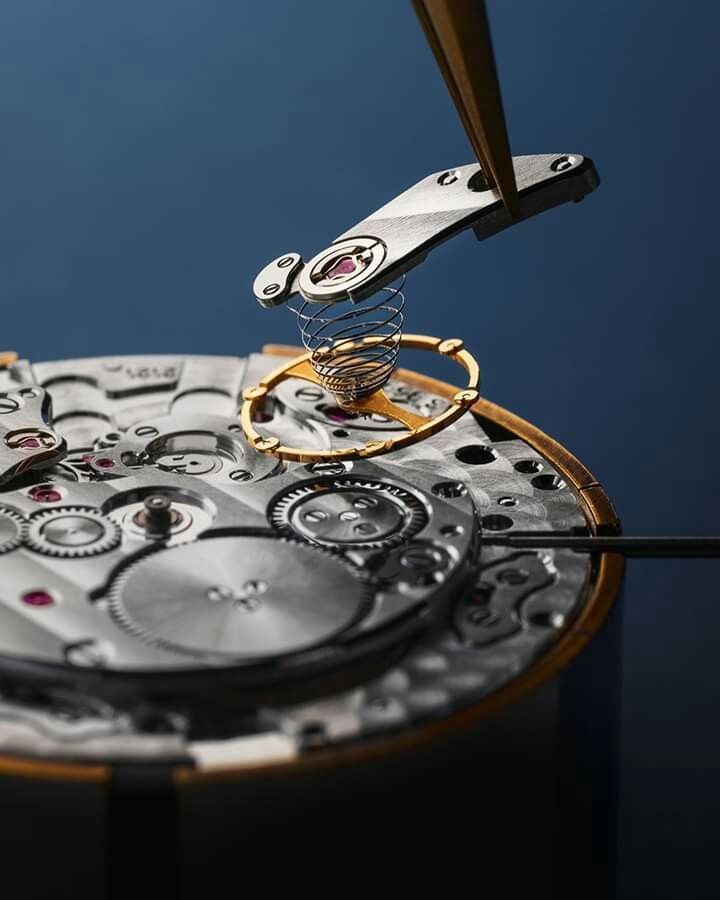
Most people buy their first serious watch for how it looks. That is a perfectly good reason. But the part that decides how the watch behaves, how often it needs winding, how accurate it stays, how long it lasts and what it costs to service, is the movement: the mechanism inside the case.
You do not need to be a watchmaker to understand it. A handful of terms and one or two habits of observation will tell you most of what matters before you buy.
The three kinds of movement
Quartz
A quartz movement is powered by a battery. A small electric current makes a quartz crystal vibrate at a very precise frequency, and that vibration keeps time.
Quartz is the most accurate of the three by a wide margin, often within a few seconds a month rather than a day. It needs a battery change every few years and very little else. It is not the choice of most collectors, but it is honest, reliable and inexpensive to maintain.
Manual wind
A manual movement stores energy in a coiled spring called the mainspring. You wind it by turning the crown, usually once a day. The spring unwinds slowly, and a series of gears and a regulating mechanism release that energy at a steady rate.
Manual movements are typically thinner, which is why they are common in classic dress watches. They ask something of you every morning, which some owners find tedious and others regard as the whole point.
Automatic (self-winding)
An automatic is a mechanical movement with one addition: a weighted semicircular disc called a rotor that swings as your wrist moves and winds the mainspring for you. Wear the watch regularly and it never stops.
Leave it in a drawer and it will run down within its power reserve, usually somewhere between forty and seventy hours, depending on the movement. This is the most common configuration in modern luxury watches.
What to look for through the caseback
Many mechanical watches have a transparent sapphire caseback. If the one in front of you does, here is what is worth noticing.
The rotor
On an automatic, the rotor is the large moving piece you see first. Tilt the watch gently and it should swing freely and silently. A rotor that grinds, catches or rattles is a reason to ask questions.
The balance wheel
Look for a small wheel oscillating rapidly back and forth. This is the balance wheel, and it is the heart of the movement: the part that divides time into equal portions. Its rhythm is what produces the familiar ticking.
The speed of that oscillation is the beat rate, measured in vibrations per hour. A movement running at 28,800 vph beats eight times a second, which is why the seconds hand appears to sweep rather than jump. Slower movements at 21,600 vph produce a slightly more visible step.
The jewels
The small red stones set into the plates are synthetic rubies. They are not decorative. Ruby is extremely hard and smooth, so it makes an excellent bearing surface where metal pivots would otherwise wear against metal. A typical automatic movement contains somewhere between twenty and thirty of them.
A higher jewel count is not automatically better. It usually reflects added complexity rather than added quality.
The finishing
Look at the surfaces of the bridges and plates. On better movements you may see parallel wave patterns, circular graining, or bevelled edges polished to a bright line. This work is largely invisible in wear and adds nothing to accuracy. It exists because someone decided it was worth doing, and it is one of the clearest signals of where a movement sits in the hierarchy.
Accuracy, honestly
A well-regulated mechanical watch typically runs within about five to fifteen seconds a day. Movements certified as chronometers are held to a tighter standard, generally within roughly four seconds slow to six seconds fast per day, tested across several positions and temperatures.
Both figures are far less accurate than an inexpensive quartz watch. That is simply the nature of a mechanism driven by a metal spring and regulated by a wheel. If a watch that has always kept good time suddenly drifts by half a minute a day, something has changed, and that is worth having looked at.
When a movement needs a service
The lubricants inside a mechanical movement degrade over time, whether or not the watch is worn. As they thin and migrate, metal begins to wear against metal. Most manufacturers suggest a full service somewhere in the region of every five years, though this varies by movement and by how the watch is used.
A complete service involves dismantling the movement entirely, cleaning every component, replacing worn parts and seals, re-lubricating, reassembling, regulating for accuracy in multiple positions, and testing water resistance before the watch goes back on the wrist.
Signs it may be due: a noticeable change in daily accuracy, a shortened power reserve, a rotor that no longer winds smoothly, or condensation under the crystal.
What this means when you are buying
- Ask which movement is inside. A specific answer is a good sign. A vague one is not.
- Ask when it was last serviced. On a pre-owned watch this matters as much as the condition of the case.
- Wind it and listen. Winding should feel smooth and consistent, not gritty or loose.
- Watch the seconds hand. It should move evenly, without hesitation or stutter.
- Have it checked before you pay. A short diagnostic on a timing machine reveals a great deal that the eye cannot.
Have a watch you would like checked?
Our workshop in Tbilisi offers free diagnostics on any timepiece. We check the movement, case, accuracy and water resistance, then tell you exactly what the watch needs and what it will cost, before any work begins. Visit us at 45G Merab Kostava Street, or call +995 555 86 88 88. You can also see the houses we hold or read about our watch service.